Beginner woodworking projects
Every project here is one you can finish. Each has an honest time and cost band, the tools it genuinely needs, a cut list, the mistakes beginners actually make, and a clear next build.
How to choose one
There are three sensible ways to pick, and none of them is "whichever looks best in the photo".
By tools. Start from what you own today, not what you intend to buy. If you have nothing that cuts wood, choose a build that needs one or two straight crosscuts and have the timber yard make them — most will, and many do it free with a purchase. If you own a drill and a couple of clamps, most of this list opens up. The tools for beginners guide marks which items are worth owning and which are better borrowed or rented.
By time. Every card below carries an honest time band. Glue has to sit clamped and finishes have to dry, so a build is rarely one unbroken session. Match the band to the longest single stretch you can actually get, then add a short second session for sanding and finishing.
By what you want at the end. Something on your desk tonight, something that holds oddments, something for the kitchen, something on the wall. The object you actually want is the one you will finish.
If you would rather have the decision made for you, what your first woodworking project should be gives a straight answer and a three-question path to it.
What is in every guide here
Each project guide follows the same shape, so once you have read one you know where to look in all of them: what you are making and why it suits a beginner; honest time and cost bands with what they depend on; a real cut list you can take to the timber rack; the tools and materials it genuinely needs; a before-you-start section covering the workspace and the safety points for that specific build; numbered steps with a description of what "right" looks like at each one; the mistakes beginners actually make and how to fix them; how to sand and finish it; a few variations; and the next build to move on to.
Every guide also names at least one point where the correct answer is to stop and ask someone more experienced. That is normal, and it belongs in a plan.
The five-project order, and why it is that order
The builds are arranged so that each one teaches the skill the next one assumes you already have.
A phone stand first, because it is measuring, marking and one clean crosscut on a piece small enough that a mistake costs an offcut. A simple box second, because four corners are where you learn to glue and clamp something square, and squareness is the skill everything else rests on. A cutting board third, because edge gluing, sanding a face flat and applying a food-safe finish all get much easier once you have already clamped a box. A planter box fourth, for repeat cuts, screws and outdoor materials. A wall shelf fifth, because drilling accurately and fixing into a wall asks you to be right the first time, and that is a fair thing to ask of your fifth project rather than your first.
You can jump around. Just know what you are skipping, because a build that assumes you can already clamp something square is a hard place to learn it.
Finishing versus stalling
The difference between a project you finish and one that stalls is almost never skill. It is scope, and it is the last twenty minutes.
Projects stall when they have too many parts, when they need a tool you have not got yet, or when they get assembled and never sanded — so they sit in the garage looking rough and quietly turn into evidence that you are no good at this. They are not that. They are unfinished.
Pick something small, buy only what that build names, and treat sanding and finishing as a planned session rather than an afterthought. The free First 5 Projects Roadmap sets the whole progression out on paper if you want it in one place. Before your first cut, read the safety guidance for beginners.
Choosing your first build
-
What Should My First Woodworking Project Be?
A straight answer to what your first woodworking project should be, with a three-question decision path and the first three builds compared side by side.
- first project
Project guides
-
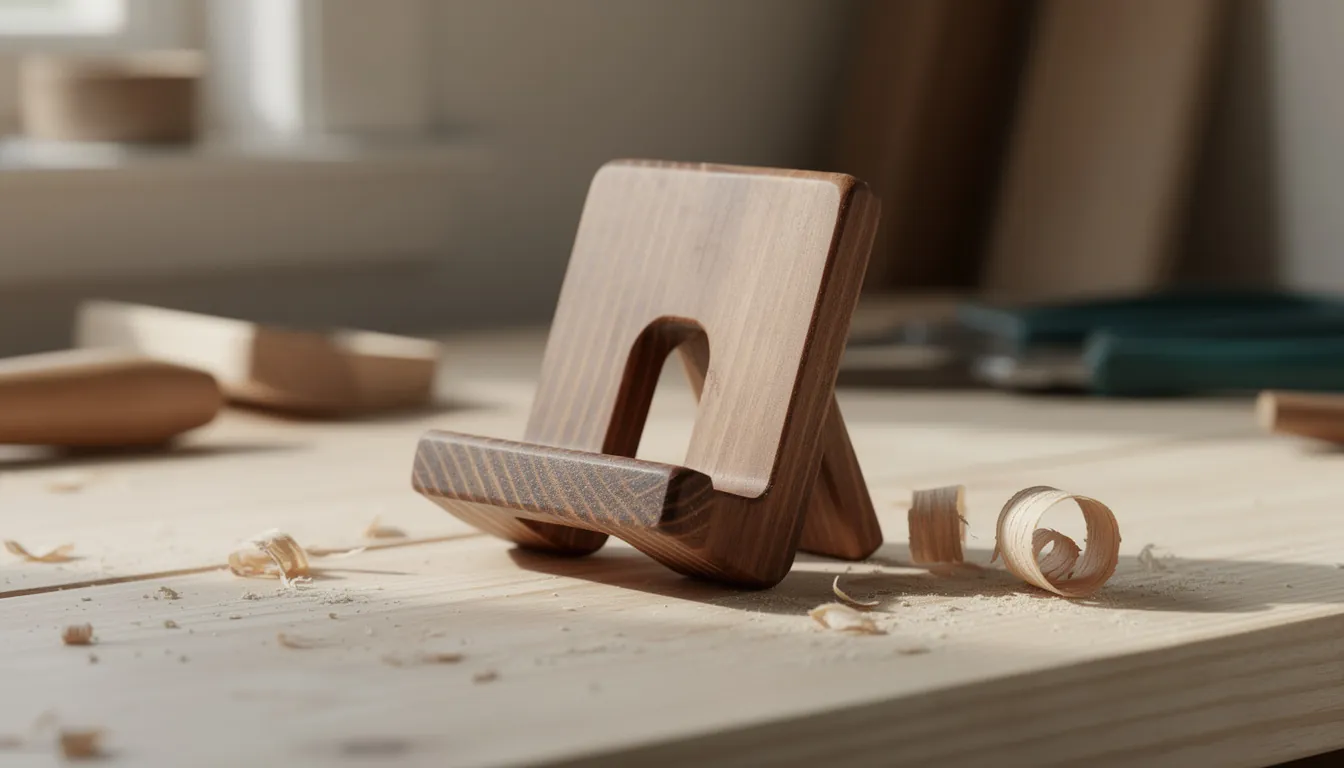
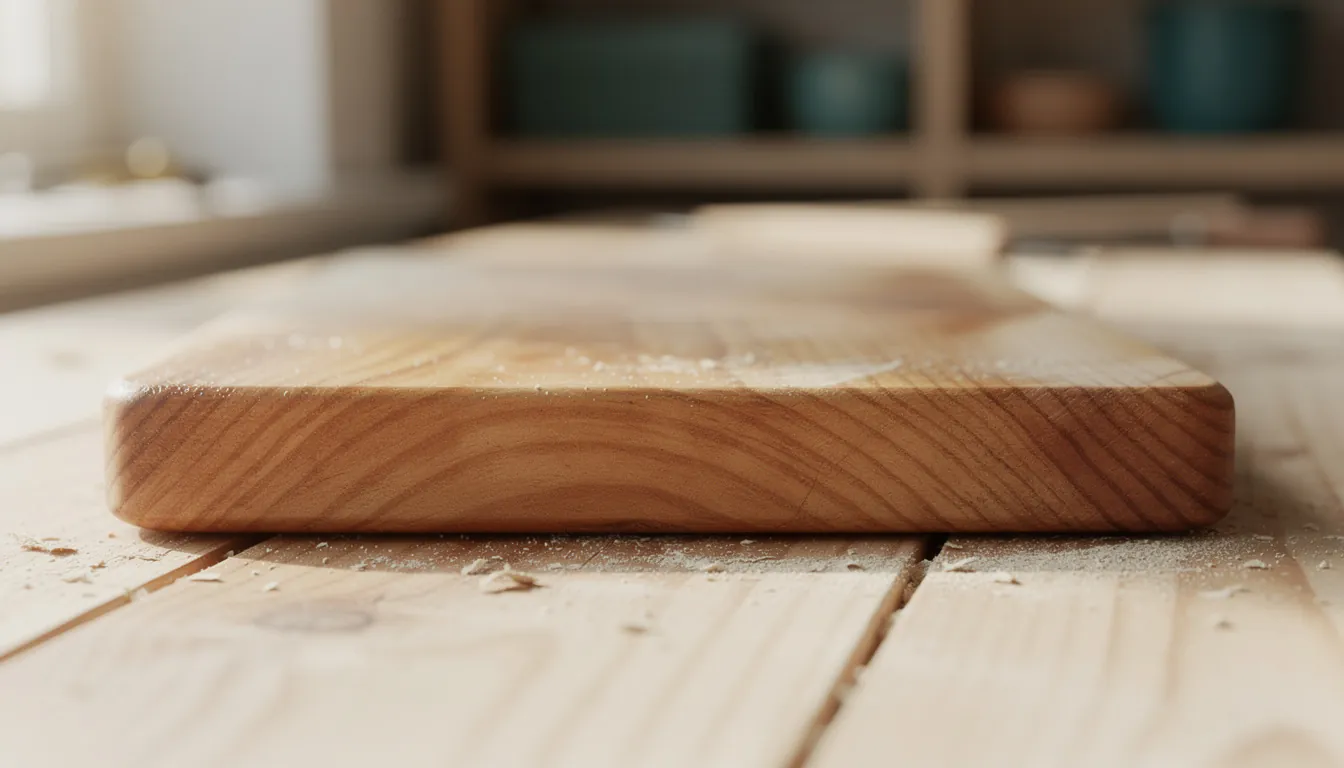
How to Make a Wooden Phone Stand (Simple Plans)
Make a wooden phone stand from one pine offcut with a hand saw and a mitre box. Cut list, the lean angle, slot width for a cased phone, and finishing.
- An afternoon
- One offcut of pine
- first project
Why it's beginner-friendly: Three short cuts, one glue-up and a single offcut, so a mistake costs you scrap wood and nothing else.
-
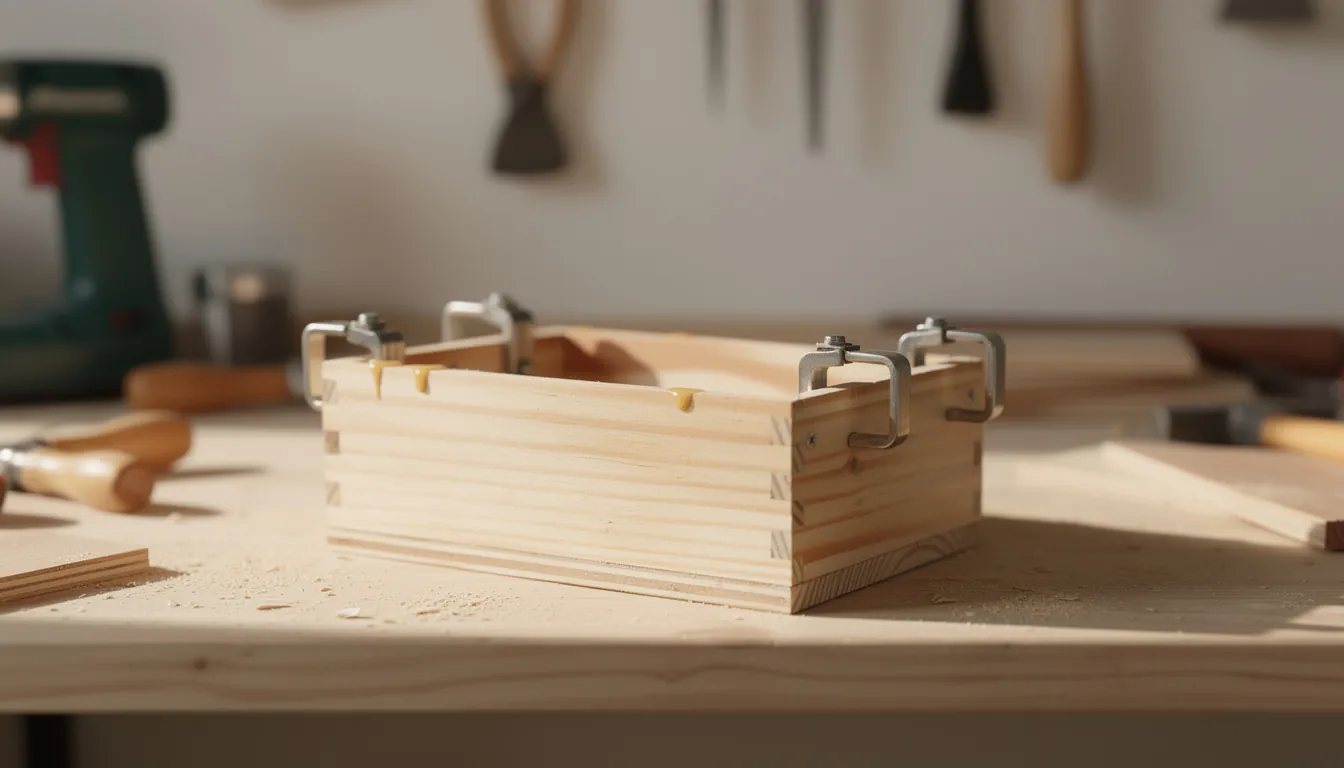
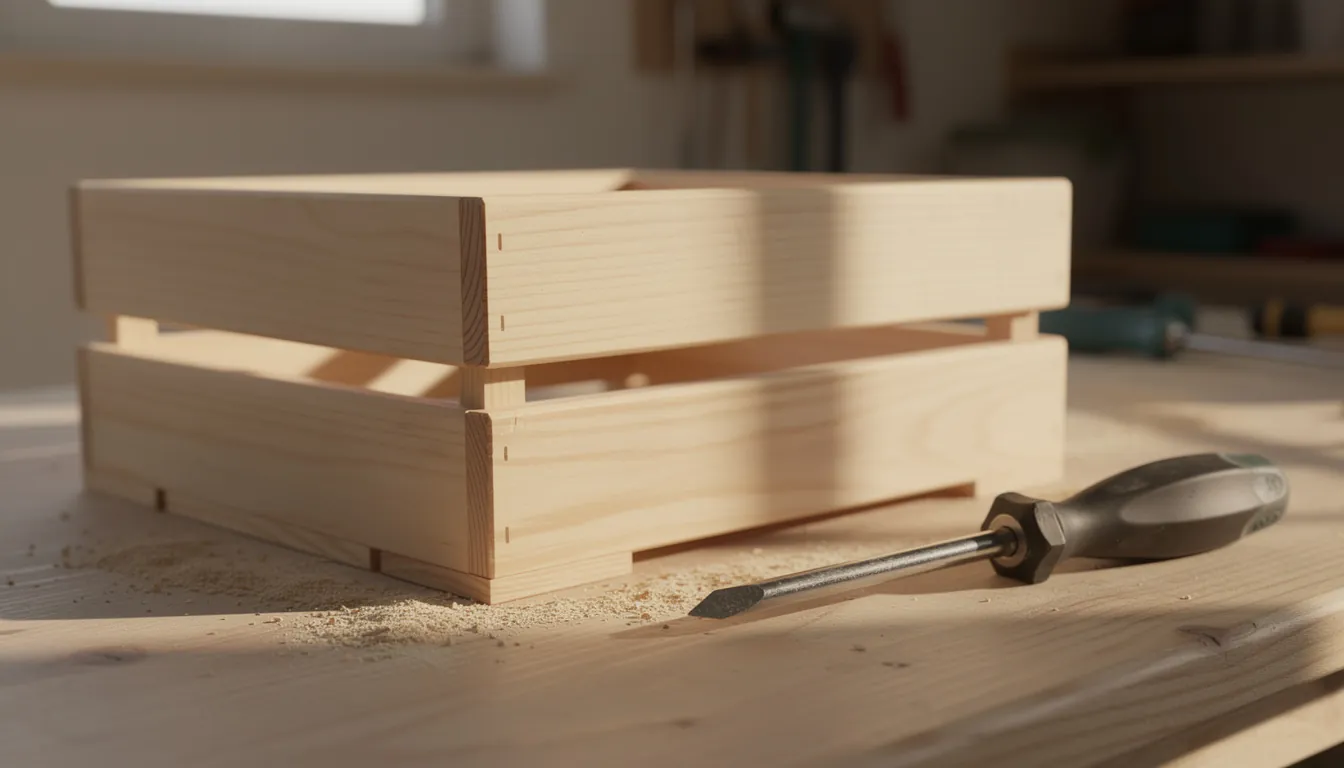
How to Make a Simple Wooden Box (Beginner Plans)
Simple wooden box plans for a beginner: a 1x4 open box with butt joints and glue. Cut list, how to clamp it square, and how to check with diagonals.
- An afternoon, plus drying time
- Under $20 of pine
- first project
Why it's beginner-friendly: Four square cuts and one glue-up, with no joint that has to fit inside another joint.
-
How to Make a Cutting Board (Beginner Guide)
How to make a cutting board from glued hardwood strips, with a no-clamp one-board option, honest end-grain notes, food-safe oiling and care.
- Two short sessions across two days
- Hardwood, so more than pine
- beginner
Why it's beginner-friendly: Straight cuts and one glue-up, and the one-board version needs no clamps at all.
-
How to Build a Planter Box (Beginner Guide)
Build a simple slatted planter box from 1x6 boards. Learn repeat cuts with a stop block, pilot holes, real drainage, and how to choose outdoor timber.
- An afternoon, plus finishing time
- Under $30 of pine; more in cedar
- beginner
Why it's beginner-friendly: Every cut is a straight crosscut, every joint is a screw, and small errors hide in the slats instead of ruining the build.
-
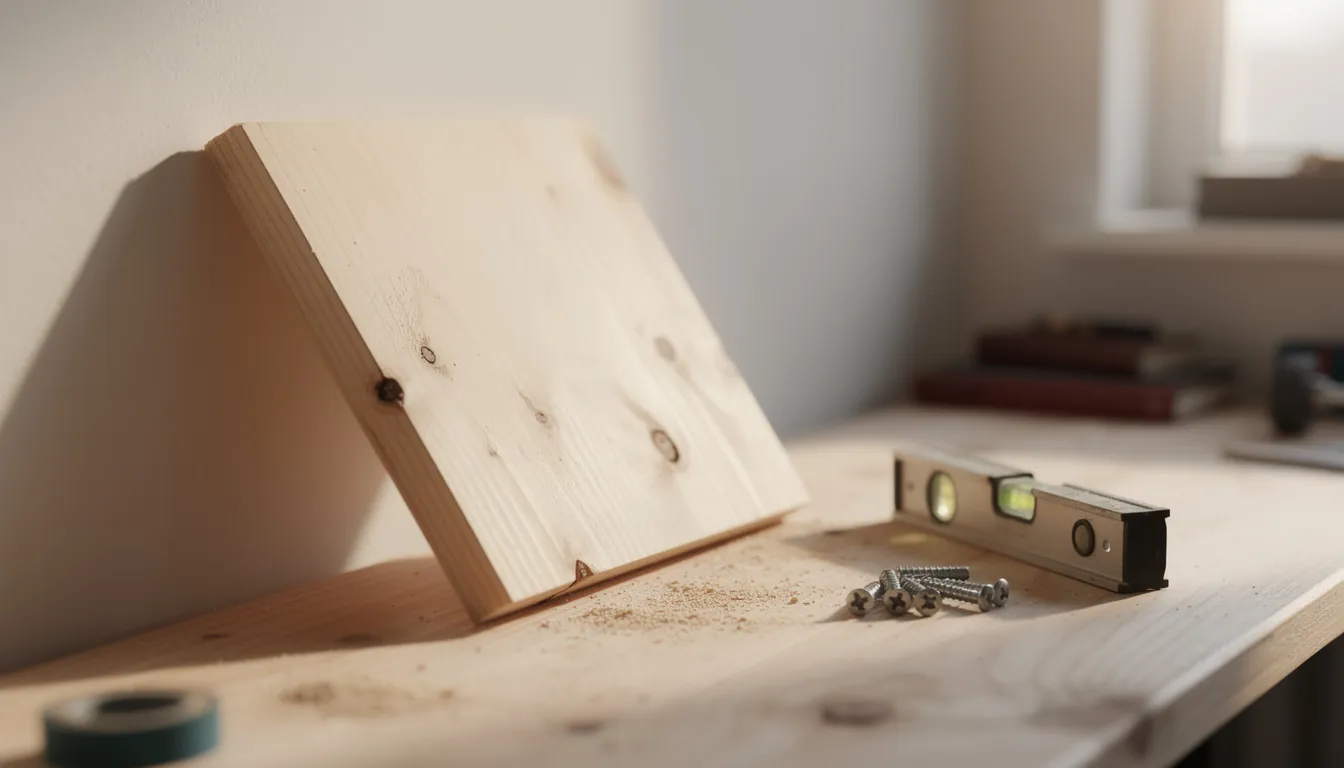
How to Make a Floating Shelf (Beginner Guide)
Make a floating shelf that sits level and square. How to find studs, mark a level line, drill straight, and choose fixings without guessing what a wall holds.
- An afternoon for the shelf, an hour to hang it
- Under $40 in pine and plywood, plus fixings
- confident beginner
Why it's beginner-friendly: The woodworking is straight cuts and glue; the real skill is marking a level line and drilling where you meant to.
-
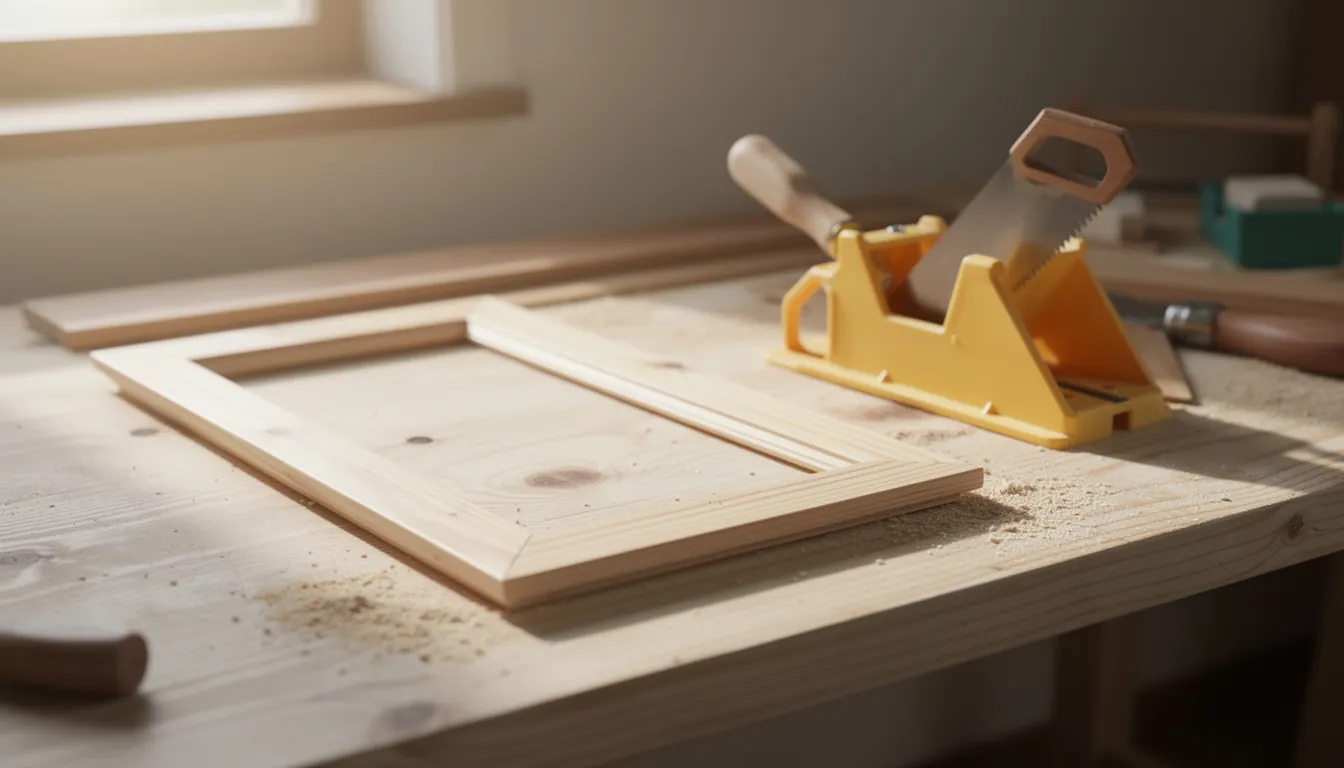
How to Make a Picture Frame (Beginner Guide)
How to make a picture frame with a mitre box, a story stick and a tape clamp, plus an honest butt-joint alternative if precise mitres beat you.
- An afternoon, plus glue drying
- Under $20 plus glass and backing
- confident beginner
Why it's beginner-friendly: Every cut is short and the materials are cheap, so the only thing being tested is accuracy.
-
Scrap Wood Projects for Beginners: 8 Small Builds
Eight small woodworking projects that use up offcuts, with the size of scrap each one needs, the skill it teaches, and how to check scrap wood is safe to cut.
- An hour or two each
- Often free, if you already have the offcuts
- beginner
Why it's beginner-friendly: Every build here is small, forgiving, and made from wood you have already paid for, so a mistake costs nothing.
Free plans
-
Free Woodworking Plans for Beginners
What a usable woodworking plan actually contains, how to tell a good free plan from a bad one, how to read a cut list, and the free beginner plans on this site.
Common questions
What is the easiest thing to make out of wood for a beginner?
A phone stand or a simple open box. Both come out of one short length of board, both are forgiving about a cut that is a degree or two off square, and neither needs a power saw. They teach measuring, marking, cutting and gluing on a piece small enough that a mistake costs a few dollars of pine rather than a whole project.
Do I need a workshop to start woodworking?
No. Every project here can be built on a balcony, in a corner of a garage, or on a folding workbench in a spare room, using hand tools and a drill. The two things you genuinely need are a surface you can clamp work to, and somewhere the dust and the noise are not a problem for anybody else.
How much does it cost to start?
Materials for a first small project are usually one or two pine boards. Tools are the bigger variable, which is why the tools pages split every item into own, borrow, rent, or buy later — most beginners already own more of the list than they think, and many timber yards and home centres will cut boards to length for you.
Which project should I actually build first?
Pick by what you have, not by what looks best. If you own almost no tools, start with the phone stand. If you want something useful by Sunday evening, build the planter box or the shelf. If you want to learn the craft properly, start with the cutting board and work through the technique guides beside it.
Get the free First 5 Projects Roadmap
Five projects in the order that builds confidence, a tool list split into own / borrow / rent / buy later, and a cut-list worksheet you can print and take to the timber rack.