Woodworking tools for beginners
Nobody needs a full workshop to build a first project. This is the shortest honest tool list, plus what to borrow, what to rent, and what to leave alone for now.
Sections6
The eight things a beginner actually needs
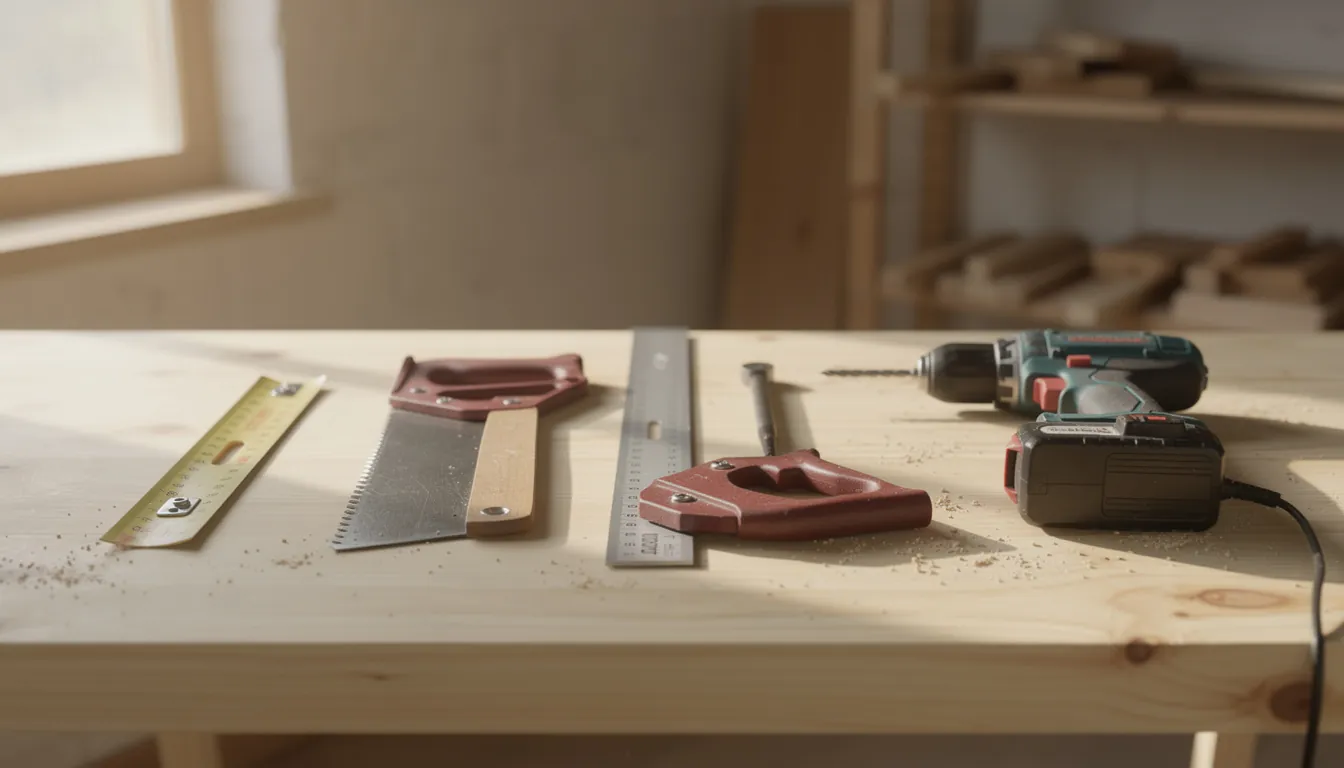
Every project on this site is built with the same short list: a tape measure, a combination square, a pencil, a hand saw with a mitre box, a drill/driver with a small set of bits, two clamps, wood glue, and sandpaper with a sanding block. That is the whole kit, and most people already own two or three of it.
| Tool | Why it earns its place | Own / borrow / rent | What to look for |
|---|---|---|---|
| Tape measure | Every part starts as a number | Own | A locking blade and a clear, readable scale in the units your plans use |
| Combination square | Marks square lines and checks corners; the reason your box closes | Own | A blade that slides smoothly and locks solidly; check it against a known straight edge in the shop |
| Pencil or marking knife | A fat line is a wide target; a fine one is a cut you can hit | Own | A sharp carpenter's pencil, or a marking knife for joints that must be tight |
| Hand saw and mitre box | Straight, repeatable crosscuts with no dust extraction and no noise | Own | A crosscut saw that fits the box, with teeth still sharp |
| Drill/driver and bits | Removes the most tedious work on any build; drives screws and drills pilot holes | Own | Variable speed, a clutch, two batteries; a small twist-bit set is enough at first |
| Two clamps | Holds glue-ups closed and holds work down so you never cut something you are gripping | Own | Long enough to span your widest project, with pads that will not dent softwood |
| Wood glue | The joint in most beginner projects; screws just hold it while it sets | Own | A standard PVA wood glue, exterior-rated if the piece lives outside |
| Sanding block and paper | The difference between "made" and "made-do" | Own | A block that holds paper flat, plus coarse, medium and fine grits |
As an Amazon Associate, this website earns from qualifying purchases.
If you are buying from scratch, a beginner woodworking tool set covers several of these at once, though it is usually cheaper to buy the four or five you are missing individually.
Own, borrow, rent, buy later
The principle is simple. Own the things you touch on every single project — the eight above. Borrow the tool one specific build needs once. Rent the expensive occasional item. Buy later, when a project you actually want to make is blocked by not having it, and not before.
That last clause matters. A tool bought against an imagined future workshop is bought blind. A tool bought because Saturday's build cannot happen without it is a tool you will use.
The hand tool path, beginner hand saw roundup, woodworking clamps roundup, cordless drill-kit comparison and the power tool path go through each option in detail, including what each tool is genuinely for and what it is not.
If you are buying, these are the ones we would buy
Five of the eight are worth naming, because they are the ones where a bad pick shows up in the work: a square that is not square, a saw that does not fit its box, a clamp that dents the board it is holding. The other three — a pencil, sandpaper, a sanding block — are commodities, and the cheapest ones in the shop are fine.
None of these are the only right answer. They are established tools that match the advice on this page, and each one is the version we would hand a beginner who asked.
You may not have to buy at all
Tool libraries lend woodworking tools for a small membership in many towns and cities. Hire counters rent sanders, jigsaws, routers and mitre saws by the day, which beats owning something that would live in a cupboard. Makerspaces give you machines and, more usefully, people who can show you how they work.
Simplest of all: most timber yards and home centres will cut boards to length for you. A beginner with a drill and a shop cutting service can build most of the projects here without ever owning a saw.
More tools do not make a first project easier
It is tempting to believe the gap between your work and a photo is equipment. It usually is not. A first project comes out well or badly on the mark, the cut following that mark, and the joint being clamped square while the glue sets — hand skills learned on cheap pine, which no purchase shortcuts.
Every new tool also brings its own learning curve and its own hazards, so arriving at a first build with five unfamiliar machines makes the day harder. Read the safety guidance for beginners before you use any of them, and follow the manual that came with your own tool. The free First 5 Projects Roadmap includes this list split into own, borrow, rent and buy later, in the order the projects need them.
Choose the wood before you choose the tool
Start with pine, spruce or fir for almost every first project. Softwood is cheaper, easier to cut and forgiving when a joint needs a little persuasion. Choose a board that is straight, dry and free of loose knots, deep splits, twist and severe bow or cup. Sight down each edge and check the ends before you put it in the cart.
Remember that a nominal board size is not its finished size: a 1x4 is usually about 3/4 by 3 1/2 inches, or 19 by 89 mm. Measure the board in front of you and follow the plan's finished dimensions. Plywood suits box backs, shelves and bases; MDF is flat and paint-friendly but heavy, moisture-sensitive and very dusty to cut. Use standard PVA wood glue for most indoor beginner builds, and follow the label for open and clamping time.
Do not use unknown reclaimed wood or pressure-treated timber for early indoor or food-contact projects. Reclaimed boards can hide metal or treatments, and pressure-treated stock is intended for outdoor structural use. Read the safety guidance for beginners before cutting or sanding any board.
Tool paths
-
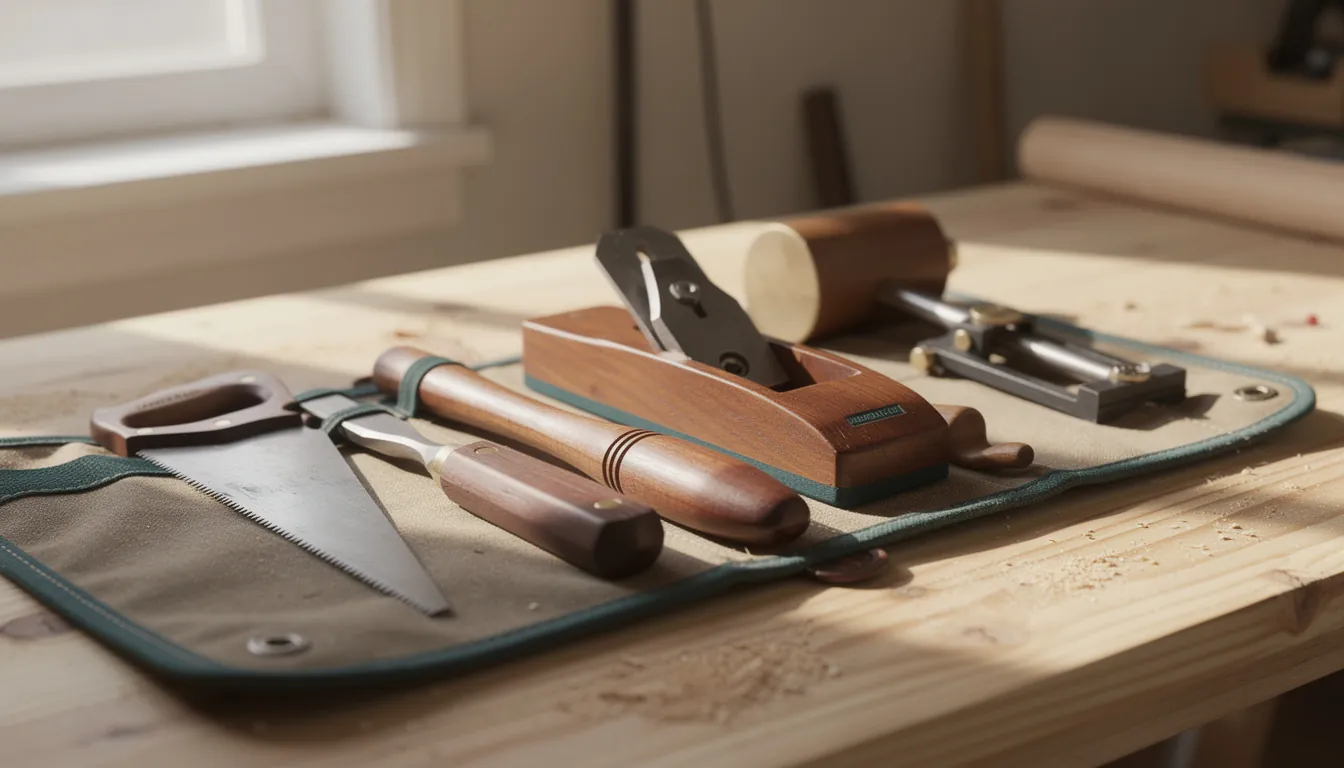
Essential Hand Tools for Woodworking
The hand tools a beginner genuinely needs, what to look for when you buy each one, the mistake each one invites, and which early projects actually use it.
- beginner
-
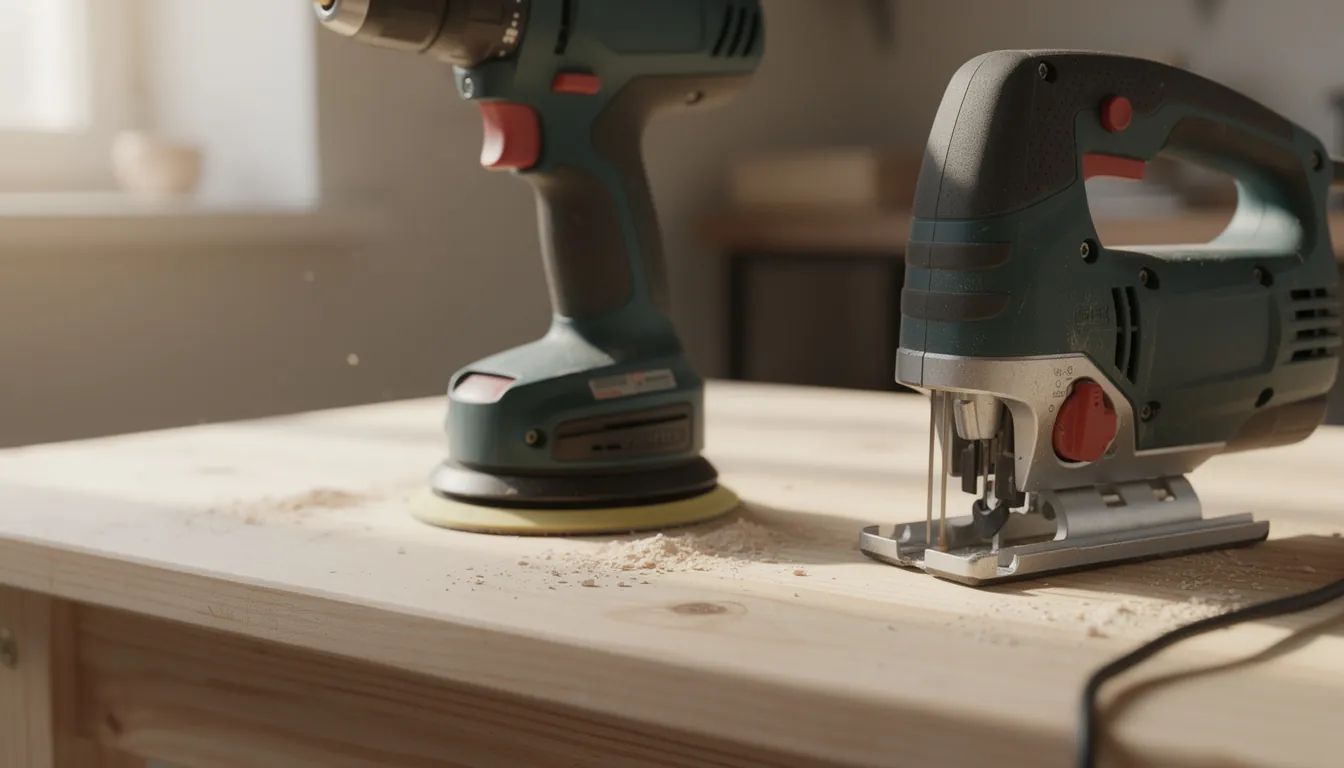
The First Power Tools to Buy for Woodworking
The order to buy power tools in: why the drill/driver comes first, what earns its place second and third, why a table saw does not, and the safety rules that never bend.
- beginner
Common questions
What tools do I need to start woodworking?
For the projects on this site: a tape measure, a combination square, a pencil, a hand saw, a drill with a small set of bits, two clamps, wood glue, and sandpaper with a sanding block. Everything past that list is a convenience rather than a requirement, and most of it is worth buying only when a project you actually want to build needs it.
Do I need a table saw?
No — and a table saw is the wrong first purchase for most beginners. It is the most demanding tool in a home shop to use safely, it costs more than every other tool on the starter list put together, and it takes permanent floor space. A hand saw with a mitre box, or asking the timber yard to cut boards to length, covers everything a beginner project needs.
Should I buy hand tools or power tools first?
Buy the drill, and build the rest of the kit in hand tools to begin with. A cordless drill/driver removes the most tedious work on a beginner project. Hand tools for cutting and shaping are quieter, cheaper, need no dust extraction, and let you feel what the cut is doing while it happens.
Can I borrow or rent instead of buying?
Often, yes. Tool libraries, hire counters at home centres, makerspaces and neighbours cover the occasional-use tools — a sander, a jigsaw, a router — that would otherwise sit idle in a cupboard. Buy the things you touch on every project; borrow the things one specific project needs once.
Get the free First 5 Projects Roadmap
Five projects in the order that builds confidence, a tool list split into own / borrow / rent / buy later, and a cut-list worksheet you can print and take to the timber rack.