Compact Double-Edge Pull Saw
- 6-inch blade
- 14 and 17 TPI cutting edges
- Flexible SK5 steel
As an Amazon Associate, this website earns from qualifying purchases.
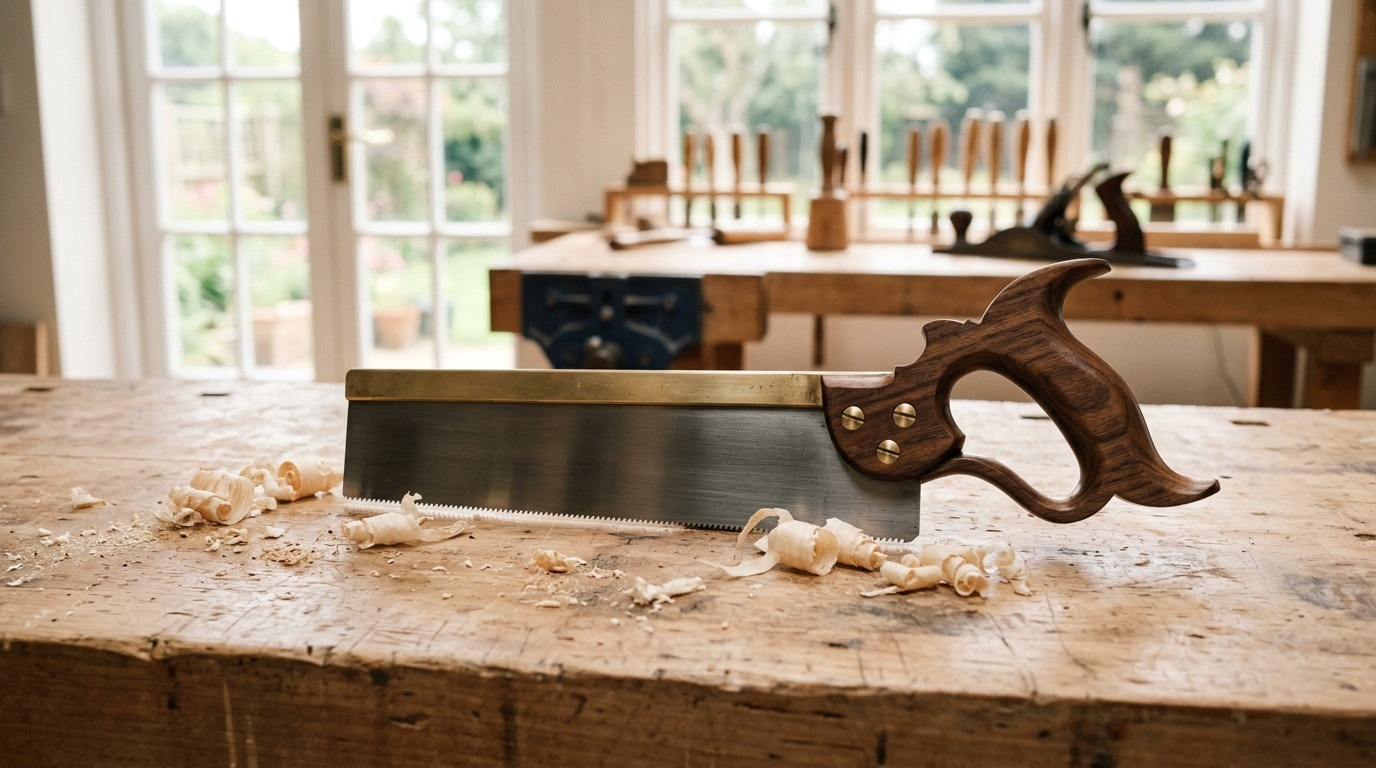
Choose a hand saw around the cut you need to make. Cutting stock to length, trimming a projecting peg and working on a small joint put different demands on the blade.
Consider the compact double-edge pull saw for small pull-cutting work, the 14-inch saw for a longer conventional blade, and the GARTOL set when separate flush-cut and Ryoba tools match your projects.
Compact pull cutting
This compact pull saw combines a 6-inch blade with 14 and 17 TPI edges. The double-edge format gives you different tooth densities without changing tools.
Its flexible SK5 blade is intended for close trimming, and the cutting action is on the pull stroke. It is a relevant choice to consider for small workpieces and details where a larger blade would be awkward.
Blade flexibility is not a substitute for supporting the work. Check the cut position and available clearance, and follow the maker's guidance before using a flexible blade close to a finished surface.
Longer blade format
This conventional hand saw has a 14-inch blade with a listed thickness of 0.9 mm. Its longer format offers a different handling choice from the compact pull saws in this comparison.
The blade is heat-treated 65Mn steel and the handle uses a soft TPR grip. The listing names wood, plywood, plastic pipe and wallboard among its intended materials; choose it according to the material and cut your project actually requires.
Allow room for the full cutting stroke. For fine work next to a finished face, compare the blade format with a purpose-specific trimming saw rather than treating every hand saw as interchangeable.
Separate trimming tools
The GARTOL set pairs a 6-inch flush-cut saw with a double-edged Ryoba saw. It gives you separate tools for close trimming and the broader cutting tasks identified for the Ryoba.
Both use flexible SK5 steel blades and Japanese-style wooden handles. The distinction between the two blade types is the main reason to consider the set rather than another single compact saw.
A set is useful when your projects genuinely call for its different tools. If you only need to make straightforward cuts to length, decide whether the extra trimming tool will earn a place in your kit.
Decide whether your next job is cutting boards to length, following a joint line or trimming something flush. Start with that task instead of choosing from a long list of possible uses.
Consider the blade length, the space for your hand and the support under the work. A shorter saw may be easier to position in a confined area, while a longer stroke needs more clearance.
Clamp an offcut and practise starting on the waste side of the line. Let the teeth cut at their intended stroke rather than forcing the blade; good support and a consistent start matter as much as the tool choice.
Choose for the cut you need to learn. Check the blade type, handle and working clearance, then practise on scrap of the same material before cutting your project parts.
A useful first saw is one that suits your intended material and feels controllable in the space where you work. There is no need to buy several blade types before you know which cuts your projects require.
Compare the tooth pattern and cutting action with the job. Straight cuts through a board and close trimming against another surface can call for different blade designs.
Consider the compact double-edge pull saw for small pull-cutting work, the 14-inch saw for a longer conventional blade, and the GARTOL set when separate flush-cut and Ryoba tools match your projects.